



Understanding Welding Nails: Applications and Advantages in Industrial Fastening
2026-02-14
Welding nails, a vital component in the realm of fastening and connecting, are designed specifically for applications that require secure and robust attachments. Unlike traditional nails, welding nails are used in conjunction with welding techniques, allowing for enhanced bonding that can withstand significant stress and environmental factors. This unique method of attachment is especially benefic
Welding nails, a vital component in the realm of fastening and connecting, are designed specifically for applications that require secure and robust attachments. Unlike traditional nails, welding nails are used in conjunction with welding techniques, allowing for enhanced bonding that can withstand significant stress and environmental factors. This unique method of attachment is especially beneficial in various industrial settings, where reliability and strength are paramount.
One of the primary advantages of welding nails is their ability to create strong joints that are less prone to failure compared to conventional fastening methods. When welding nails are applied, they become an integral part of the materials being joined, resulting in a seamless and durable connection. This quality makes them particularly useful in applications such as construction, automotive manufacturing, and metalworking, where structural integrity is critical.
Welding nails come in various types and materials, tailored to meet specific application requirements. Carbon steel, stainless steel, and galvanized options are commonly available, each providing distinct benefits concerning corrosion resistance, strength, and cost-effectiveness. The choice of material influences not only the welding process but also the performance of the finished product. Understanding these variations helps users select the most suitable welding nails for their projects.
The application process for welding nails typically involves using a stud welder or a similar tool that generates the necessary heat to fuse the nail to the substrate. This process ensures a clean and precise connection, minimizing the risk of misalignment that can occur with other fastening techniques. Additionally, welding nails can be used in applications where conventional fasteners may not fit, such as in confined spaces or with irregular surfaces.
Moreover, using welding nails can significantly reduce installation time and labor costs. The speed at which these nails can be applied results in quicker project turnaround without compromising on quality. This efficiency is particularly beneficial in high-volume manufacturing environments, where time is often a critical factor.
In summary, welding nails present a reliable fastening solution for various industrial applications. Their strength, versatility, and ease of use make them an excellent choice for projects requiring durable connections. By understanding the advantages and applications of welding nails, industry professionals can enhance their fastening strategies, leading to more efficient and successful outcomes in their projects.
One of the primary advantages of welding nails is their ability to create strong joints that are less prone to failure compared to conventional fastening methods. When welding nails are applied, they become an integral part of the materials being joined, resulting in a seamless and durable connection. This quality makes them particularly useful in applications such as construction, automotive manufacturing, and metalworking, where structural integrity is critical.
Welding nails come in various types and materials, tailored to meet specific application requirements. Carbon steel, stainless steel, and galvanized options are commonly available, each providing distinct benefits concerning corrosion resistance, strength, and cost-effectiveness. The choice of material influences not only the welding process but also the performance of the finished product. Understanding these variations helps users select the most suitable welding nails for their projects.
The application process for welding nails typically involves using a stud welder or a similar tool that generates the necessary heat to fuse the nail to the substrate. This process ensures a clean and precise connection, minimizing the risk of misalignment that can occur with other fastening techniques. Additionally, welding nails can be used in applications where conventional fasteners may not fit, such as in confined spaces or with irregular surfaces.
Moreover, using welding nails can significantly reduce installation time and labor costs. The speed at which these nails can be applied results in quicker project turnaround without compromising on quality. This efficiency is particularly beneficial in high-volume manufacturing environments, where time is often a critical factor.
In summary, welding nails present a reliable fastening solution for various industrial applications. Their strength, versatility, and ease of use make them an excellent choice for projects requiring durable connections. By understanding the advantages and applications of welding nails, industry professionals can enhance their fastening strategies, leading to more efficient and successful outcomes in their projects.
Key words:
RELATED INFORMATION
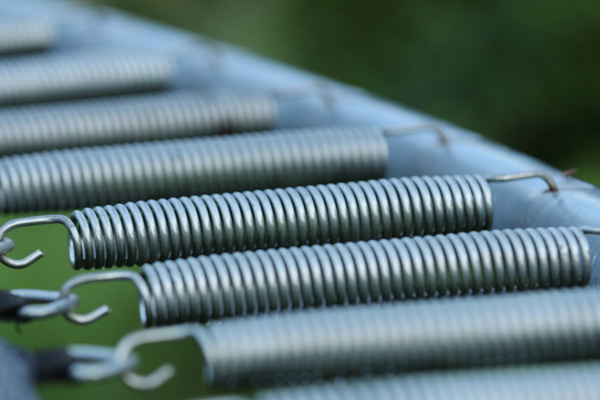
We know that within the elastic limit, the elongation (or contraction) of the spring is proportional to the external force.
2024-05-22
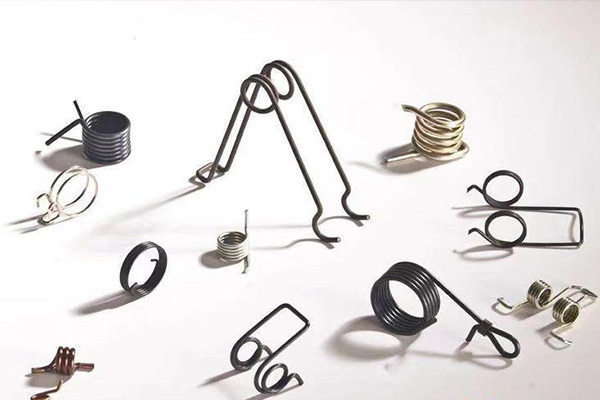
The current pattern of the spring industry
For the spring industry, for a long time, there has been an oversupply of low-grade ordinary springs.
2024-05-22
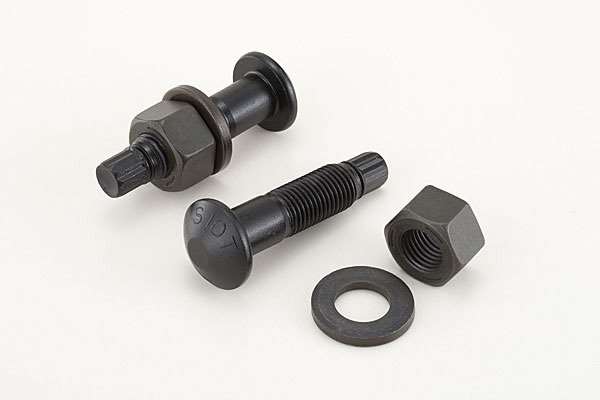
What material is generally used for high-strength bolts?
The upper limit of the tensile strength of the material used in high-strength bolts has a lot to do with the quenching treatment.
2024-05-22


Service E-mail
Service TEL
Address
Handan City, Hebei Province, China
To inquire about our products, please leave your email to us and we will contact you within 24 hours.
