



Understanding Stainless Steel Expansion: Key Insights for Industrial Applications
2025-11-26
Stainless steel expansion is an essential consideration in the design and application of industrial equipment and components, particularly in fasteners and connectors. Understanding this phenomenon is crucial for engineers and designers, as it directly affects the performance and longevity of materials used in diverse industrial settings.
Thermal expansion refers to the tendency of materials to ch
Stainless steel expansion is an essential consideration in the design and application of industrial equipment and components, particularly in fasteners and connectors. Understanding this phenomenon is crucial for engineers and designers, as it directly affects the performance and longevity of materials used in diverse industrial settings.
Thermal expansion refers to the tendency of materials to change their dimensions in response to temperature fluctuations. Stainless steel, known for its durability and corrosion resistance, also exhibits this characteristic, making it imperative to account for its expansion when integrating it into mechanical systems. Typically, stainless steel expands at a rate of approximately 16.5 microstrain per degree Celsius. This means that for every degree Celsius increase in temperature, a meter-long piece of stainless steel will expand by about 0.0165 mm.
One of the unique features of stainless steel is its low coefficient of thermal expansion (CTE) compared to other metals, such as aluminum or carbon steel. This lower CTE allows for better dimensional stability and makes stainless steel an ideal choice for applications exposed to varying temperatures. However, while this property can be beneficial, it is essential to factor in the expansion when designing assemblies that will be subjected to temperature changes.
When designing fasteners and connectors made from stainless steel, engineers should incorporate features that accommodate the material's expansion. This can include using slotted holes in structural components, allowing for movement as the temperature varies without compromising the integrity of the connection. Additionally, selecting the correct grade of stainless steel can also influence its performance under fluctuating thermal conditions. For instance, austenitic stainless steels, commonly used in fasteners, possess excellent ductility and are less prone to stress corrosion cracking, which can be advantageous in high-temperature environments.
Moreover, the application of stainless steel in environments that experience thermal cycling—such as piping systems in chemical processing or power generation—requires careful attention to bolting and fastening techniques. The expansion behavior of stainless steel can lead to loosening of connections if not properly addressed, potentially resulting in leaks or system failures. Therefore, the use of locking mechanisms, such as lock washers or prevailing torque nuts, is often recommended to enhance the reliability of joints subjected to expansion.
In summary, understanding stainless steel expansion is vital for ensuring the effectiveness and durability of fasteners and connectors in industrial applications. By recognizing the material's properties and designing accordingly, engineers can mitigate the risks associated with thermal expansion, leading to safer and more efficient systems.
Thermal expansion refers to the tendency of materials to change their dimensions in response to temperature fluctuations. Stainless steel, known for its durability and corrosion resistance, also exhibits this characteristic, making it imperative to account for its expansion when integrating it into mechanical systems. Typically, stainless steel expands at a rate of approximately 16.5 microstrain per degree Celsius. This means that for every degree Celsius increase in temperature, a meter-long piece of stainless steel will expand by about 0.0165 mm.
One of the unique features of stainless steel is its low coefficient of thermal expansion (CTE) compared to other metals, such as aluminum or carbon steel. This lower CTE allows for better dimensional stability and makes stainless steel an ideal choice for applications exposed to varying temperatures. However, while this property can be beneficial, it is essential to factor in the expansion when designing assemblies that will be subjected to temperature changes.
When designing fasteners and connectors made from stainless steel, engineers should incorporate features that accommodate the material's expansion. This can include using slotted holes in structural components, allowing for movement as the temperature varies without compromising the integrity of the connection. Additionally, selecting the correct grade of stainless steel can also influence its performance under fluctuating thermal conditions. For instance, austenitic stainless steels, commonly used in fasteners, possess excellent ductility and are less prone to stress corrosion cracking, which can be advantageous in high-temperature environments.
Moreover, the application of stainless steel in environments that experience thermal cycling—such as piping systems in chemical processing or power generation—requires careful attention to bolting and fastening techniques. The expansion behavior of stainless steel can lead to loosening of connections if not properly addressed, potentially resulting in leaks or system failures. Therefore, the use of locking mechanisms, such as lock washers or prevailing torque nuts, is often recommended to enhance the reliability of joints subjected to expansion.
In summary, understanding stainless steel expansion is vital for ensuring the effectiveness and durability of fasteners and connectors in industrial applications. By recognizing the material's properties and designing accordingly, engineers can mitigate the risks associated with thermal expansion, leading to safer and more efficient systems.
Key words:
RELATED INFORMATION
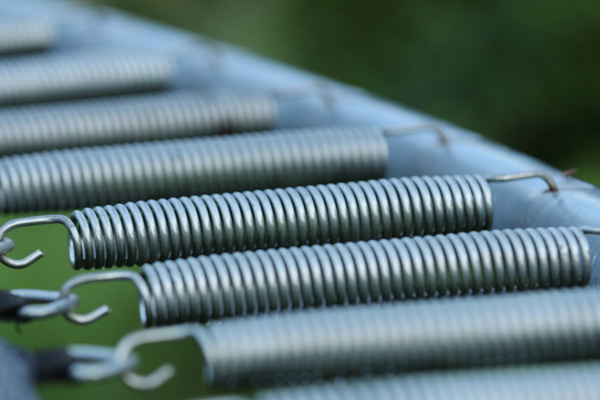
We know that within the elastic limit, the elongation (or contraction) of the spring is proportional to the external force.
2024-05-22
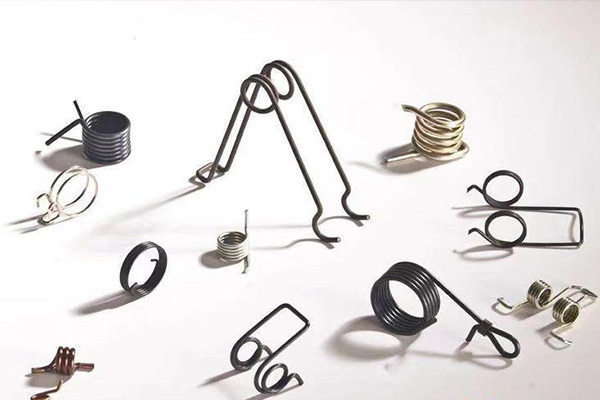
The current pattern of the spring industry
For the spring industry, for a long time, there has been an oversupply of low-grade ordinary springs.
2024-05-22
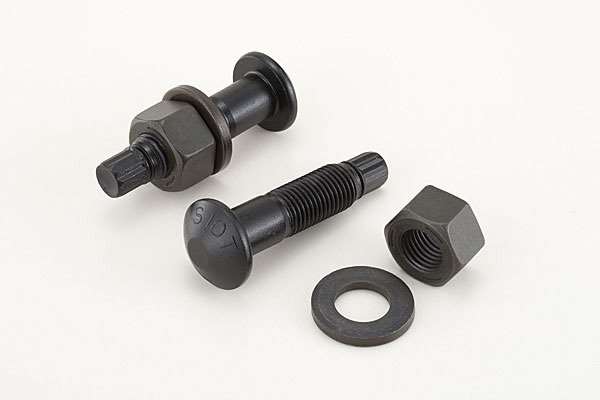
What material is generally used for high-strength bolts?
The upper limit of the tensile strength of the material used in high-strength bolts has a lot to do with the quenching treatment.
2024-05-22


Service E-mail
Service TEL
Address
Handan City, Hebei Province, China
To inquire about our products, please leave your email to us and we will contact you within 24 hours.
