



High Strength Screws: Reliable Fastening Solutions for Demanding Applications
2026-02-27
High strength screws are essential fastening components widely used in modern engineering, construction, manufacturing, and industrial assembly. Designed to withstand heavy loads and extreme working conditions, these screws provide superior mechanical performance compared with standard fasteners. Manufactured from premium materials such as alloy steel, carbon steel, or stainless steel, high strength screws undergo advanced heat treatment processes to achieve exceptional tensile strength, hardness, and fatigue resistance.
One of the most important characteristics of high strength screws is their ability to maintain structural integrity under high stress and vibration. These fasteners are specifically engineered to hold critical components securely in place, preventing loosening or failure during operation. Their reliable performance makes them indispensable in industries such as automotive manufacturing, heavy machinery production, infrastructure construction, aerospace engineering, and energy equipment installation.
High strength screws are available in a wide range of grades and standards to meet different engineering requirements. Common strength grades include 8.8, 10.9, and 12.9 according to international standards. Each grade represents a specific level of tensile strength and yield strength, ensuring that engineers and technicians can select the appropriate fastener for a given application. Higher grade screws offer greater strength and are often used in high-load environments such as structural steel connections and heavy equipment assemblies.
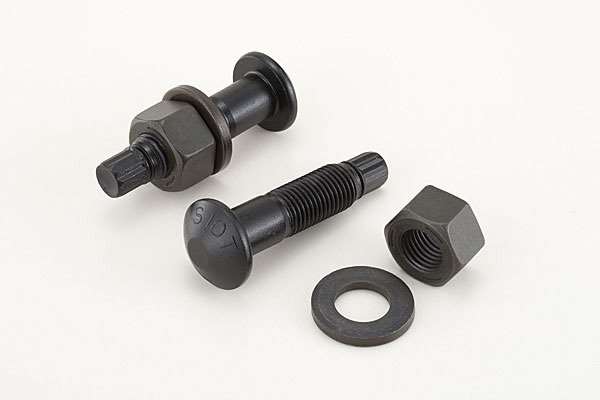
In addition to their strength, high strength screws are manufactured in various head types and designs to suit different installation needs. Popular types include hex head screws, socket head cap screws, flange screws, countersunk screws, and machine screws. These variations allow engineers to choose the most suitable fastening solution for different structures and mechanical systems. The thread design is also optimized for improved grip and load distribution, enhancing the stability and durability of the connection.
Surface treatment is another critical aspect of high strength screws. To improve corrosion resistance and extend service life, these fasteners often receive protective coatings such as zinc plating, hot-dip galvanizing, black oxide coating, or phosphate treatment. These surface finishes protect the screws from moisture, chemicals, and environmental exposure, making them suitable for both indoor and outdoor applications. In harsh environments such as marine, chemical, or mining industries, corrosion-resistant coatings are especially important for maintaining long-term reliability.
High strength screws also offer excellent fatigue resistance. In many mechanical systems, components are subjected to repeated loads and vibrations over time. Ordinary fasteners may loosen or fail under these conditions, but high strength screws are specifically engineered to maintain consistent clamping force and prevent structural fatigue. This feature is particularly important in vehicles, machinery, bridges, and industrial equipment where safety and reliability are critical.
Installation of high strength screws typically requires precise torque control to ensure optimal fastening performance. Proper tightening techniques help achieve the correct clamping force and prevent over-tightening or under-tightening. In many industrial applications, torque wrenches or hydraulic tightening tools are used to ensure accurate installation. Engineers also follow international standards such as ISO, DIN, or ASTM to guarantee compatibility and performance.
Another advantage of high strength screws is their versatility. They are used in a wide variety of applications including steel structures, heavy equipment, wind turbines, railways, automotive frames, industrial machinery, and construction projects. Their ability to provide strong, stable, and long-lasting connections makes them a key component in modern mechanical and structural systems.
Maintenance requirements for high strength screws are relatively simple. Periodic inspection is recommended to check for signs of corrosion, wear, or loosening. Proper lubrication and protection can further enhance performance and extend service life. When installed and maintained correctly, high strength screws can provide reliable service for many years.
Key Features:
Manufactured from high-quality alloy steel, carbon steel, or stainless steel
High tensile strength and excellent load-bearing capacity
Available in multiple strength grades such as 8.8, 10.9, and 12.9
Various head types and thread designs for different applications
Corrosion-resistant surface treatments for long-term durability
Excellent fatigue resistance under vibration and repeated stress
Benefits:
Provides strong and reliable fastening in critical structures
Enhances safety and stability of mechanical systems
Suitable for demanding industrial and construction environments
Long service life with minimal maintenance
In conclusion, high strength screws play a vital role in modern engineering and industrial manufacturing. Their superior strength, durability, and versatility make them an indispensable fastening solution for a wide range of applications. As industries continue to demand higher performance and reliability, high strength screws will remain a fundamental component in ensuring the safety and stability of complex mechanical and structural systems.
Key words:
high strength screws
RELATED INFORMATION
2024-05-22
The current pattern of the spring industry
2024-05-22
What material is generally used for high-strength bolts?
2024-05-22


Service E-mail
Service TEL
Address
Handan City, Hebei Province, China
To inquire about our products, please leave your email to us and we will contact you within 24 hours.
